Building Your Dream Cortijo in Andalusia: A Dose of Reality on Planning Permission
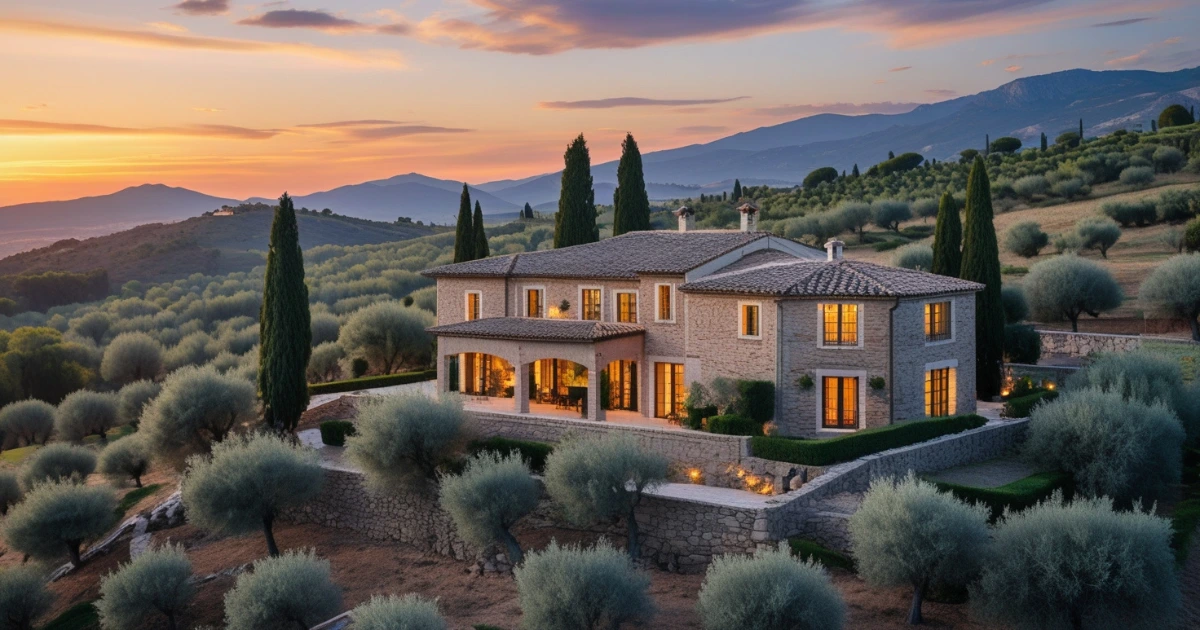
The vision is intoxicating, isn't it? A gleaming white house, nestled amongst olive groves, with the scent of jasmine on the warm evening air. You imagine long lunches on the terrace, a pool shimmering under the Andalusian sun, and a life far removed from the grey and the grind. I’ve seen that dream in the eyes of countless clients over the years. But between that beautiful vision and the reality of laying the first brick lies a formidable beast: Spanish planning law.
Let's be frank. If you're dreaming of buying a cheap plot of rustic land and easily building a new home, you may need to adjust your expectations. Significantly. The default position of the Andalusian government is, and has been for some time, a clear 'no' to new residential construction on rural land. It’s a policy designed to prevent speculative development, protect the stunning countryside from sprawl, and preserve its agricultural character. It’s a laudable goal, even if it feels like a personal roadblock to your dream.
But is it completely impossible? No, not always. The path is narrow, fraught with bureaucratic complexities, and requires patience and deep pockets. But for the well-informed and well-advised, certain, very specific, windows of opportunity do exist. This isn't a simple checklist; it's more like navigating a maze. A maze with a very expensive entrance fee.
The Ground Rules: Understanding Suelo Rústico and the LISTA Law
First, a quick vocabulary lesson. In Spain, land is broadly zoned as either Suelo Urbano (urban land, where you can generally build) or Suelo Rústico (rustic land, where you generally can't). The vast majority of the countryside falls into the latter category.
The governing legislation here in Andalusia is the LISTA (Ley de Impulso para la Sostenibilidad del Territorio de Andalucía). This 2021 law replaced the older, much-maligned LOUA. While LISTA aimed to streamline some processes, its core principle remains the protection of rural land. It didn't exactly throw the doors open for new country houses. What it did was clarify the very specific circumstances under which an exception might be considered. The key takeaway is that you cannot build a new home on rustic land simply because you want to live there. The justification must come from the land itself.
The Exceptions to the Rule: Your Potential Pathways
So, if the default is 'no', what are these glimmers of 'maybe'? They generally fall into two main categories that are relevant for a private individual. A third, for large-scale projects, is usually the domain of commercial developers.
1. The Rebuild of a Legally Recognised Ruin
This is perhaps the most common route people explore. You find a plot with a crumbling, vine-covered ruin and think, "Perfect! I'll just rebuild it." It appears to be a straightforward proposition, but the devil is entirely in the detail. For this to be a viable option, the ruin must have been a legal *vivienda* (dwelling) in the first place. A notation in the property registry (*Registro de la Propiedad*) is the gold standard.
An old stone structure that was historically an animal shed (*almacén* or *corral*) does not grant you the right to build a house. The authorities need proof of its residential status. This can sometimes be established through old aerial photographs (like the famous 1956 "vuelo americano"), council tax records, or other official documentation. The ruin itself must also exist in a physical, recognisable state. A pile of stones that you're told *used* to be a house is unlikely to pass muster. Even with a legitimate ruin, you are typically constrained to rebuilding on the original footprint, perhaps with a small, legally defined percentage increase in volume. The idea of buying a tiny ruin and turning it into a sprawling villa is, for the most part, a fantasy.
2. The Agriculturally Linked Dwelling
This is a much tougher path and one that is frequently misunderstood. LISTA allows for a new dwelling on rustic land if it is deemed essential and directly linked to a significant agricultural, livestock, or forestry operation. The key word here is "essential."
This isn't for a hobby farm. You can't plant 100 avocado trees and claim you need a 300-square-meter house to look after them. You would need to present a comprehensive and credible business plan, prepared by an agricultural engineer (*ingeniero agrónomo*), that demonstrates the farm is not only economically viable but that its success *requires* a permanent, on-site residential presence. Think of a large-scale organic goat farm that needs 24/7 monitoring during kidding season, or a specialised forestry project. The proposed house must also be proportionate in size and style to its agricultural purpose; a modest farmhouse, not a luxury mansion. The authorities are, quite rightly, very skeptical of applications that look like a country house with a token farm attached, rather than a genuine farm that needs a house.
The Process: A Marathon of Paperwork and Patience
If you believe your project fits one of the narrow exceptions, the journey has only just begun. It's a process that demands a solid professional team and the patience of a saint.
Your first step, before you even consider making an offer on a piece of land, is to hire your team. You need two key players: a specialist planning lawyer and a local architect. Not just any architect, but one with a proven track record of successful rural applications in that specific municipality. Their relationship with the town hall's technical department can be invaluable.
This team will perform exhaustive due diligence. They’ll scrutinise the land registry, the *Catastro* (the land survey), and, most importantly, the local town plan (*PGOU* or *Plan General de Ordenación*). They'll check for any regional or environmental protections – is the land in a national park, near a protected riverbed, or in a zone of archaeological interest? Any of these can halt a project before it even starts. I once had a client who found a perfect plot, only for due diligence to reveal it was on a historical cattle trail (*vía pecuaria*), making it completely untouchable.
If the due diligence checks out, your architect will prepare a *Proyecto Básico* (basic project/plans). This is submitted to the local *Ayuntamiento* (town hall). This is where the waiting truly begins. The town hall will consult with its own technicians and often has to refer the project to the regional government (*Junta de Andalucía*) in Seville or Málaga for approval. This can take many months, sometimes well over a year. You will face questions, requests for more information (*requerimientos*), and potential objections.
If, and it's a big if, you navigate this gauntlet successfully, you will be granted a building license (*Licencia de Obra*). Only then can you get your final technical drawings (*Proyecto de Ejecución*) approved and finally, begin to build.
Frequently Asked Questions
- Can I buy any plot of suelo rústico and expect to get planning permission?
Almost certainly not. The general rule is that new residential construction is prohibited on rustic land to protect the countryside. Exceptions are very specific and hard to meet.
- What if the land already has a ruin on it?
This is a potential route, but only if the ruin was a legally registered dwelling (*vivienda*), not a farm building. You'll need to prove its legal and historical status, and you'll likely be restricted to the original footprint.
- How long does the planning process take?
Be prepared for a long wait. From initial due diligence to receiving a building license, a period of 18 to 24 months is not uncommon, and it can sometimes be longer.
- Is an agricultural project an easy way to get permission?
No, it's one of the most difficult routes. It requires a substantial, commercially viable agricultural business plan proving that an on-site house is absolutely essential for the farm's operation, not just a matter of convenience.
- The estate agent told me I can definitely build on the plot. Should I trust them?
No. While many agents are professional, their job is to sell the land. You must always rely on your own *independent* legal and technical advice from a qualified Spanish lawyer and architect before purchasing.
- What's the most critical first step?
Engage a specialist lawyer and a local architect *before* you buy anything. Their initial due diligence will be the best money you ever spend, potentially saving you from a disastrously expensive mistake.
A Final, Grounded Thought
Building a new home in the Andalusian countryside is one of the most challenging property projects you can undertake in Spain. It's a world away from buying a resale apartment on the coast. The system is designed to be difficult, to protect a landscape that everyone cherishes.
Success is rare and is reserved for those who are exceptionally well-prepared, well-funded, and well-advised. It requires a forensic approach to due diligence, a watertight case for an exception, and an almost superhuman level of patience. The dream is still beautiful, but achieving it requires you to be a hard-nosed realist first and a romantic second.